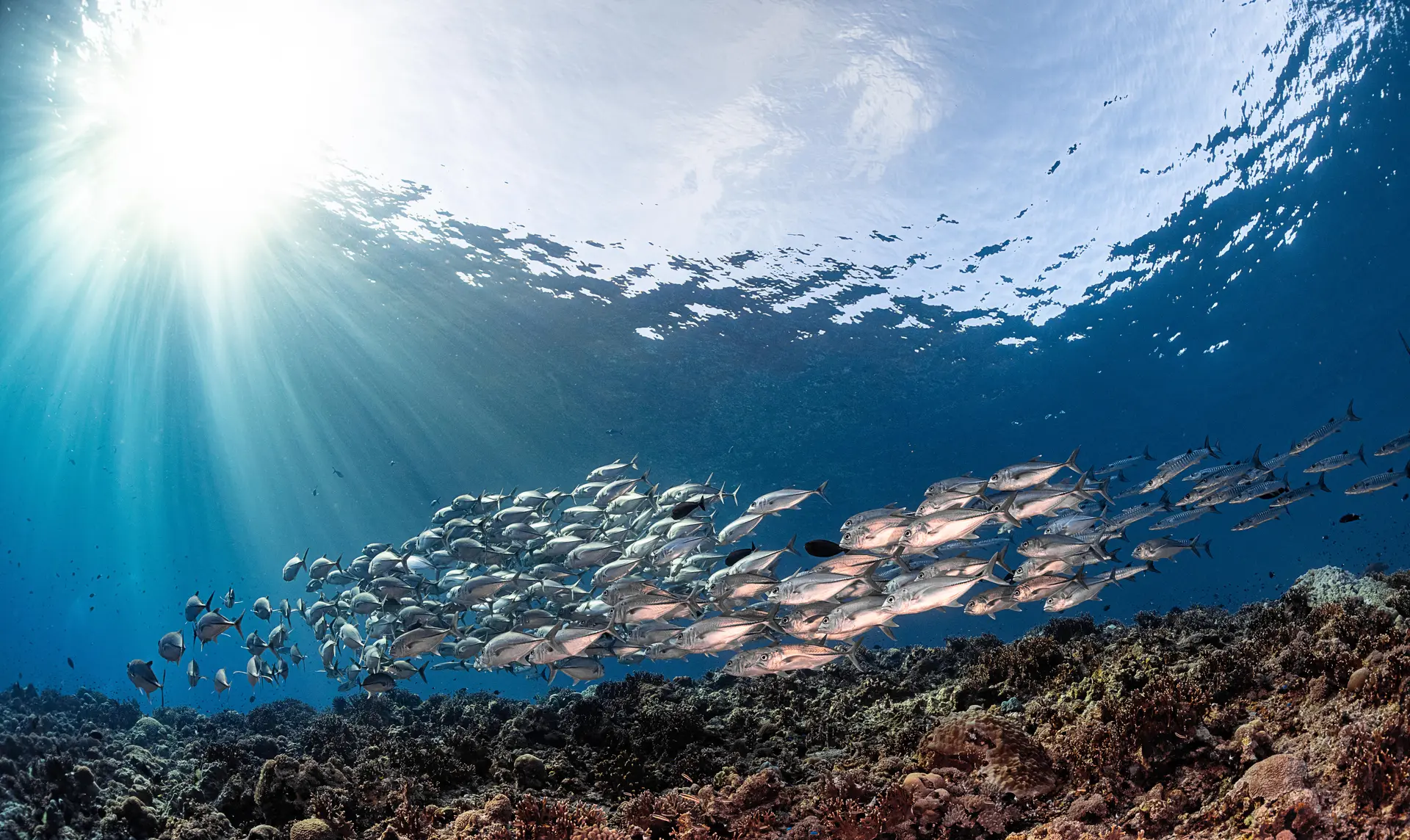
Moalboal
Philippines · Cebu
Moalboal on Cebu's southwest coast is built around two things: the sardine run that lives year round at Panagsama Beach, and the wall diving at Pescador Island just offshore. Easy shore entries, big macro on the house reef, and a relaxed backpacker town.
How this reef is doing
ⓘ How we measure thisReef state
Resident sardine bait ball and the Pescador wall are unchanged. House reef cover has thinned but the macro and pelagic encounters drive trips here.
Coral cover
Fish life
Heat
Warmer than usual right now, but not hot enough to bleach.
Fishing
Some fishing is allowed here, in marked zones.
Sources · MERMAID and the survey teams · NOAA Coral Reef Watch · Global Fishing Watch and reef gravity
Coral cover over time
Live coral cover, by survey year
Across surveys in 2023 and 2024, live coral cover here has risen from 3% to 22%. Every point is a real survey reading, never a projection.
Live coral cover, percent by year
| Year | Coral cover |
|---|---|
| 2023 | 3% |
| 2024 | 22% |
What you will see
13 species across the dive sites here
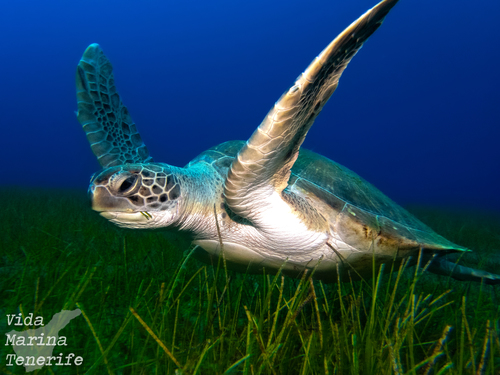
Green Sea Turtle
Seen 2 months ago
at Pescador Island
Least concern
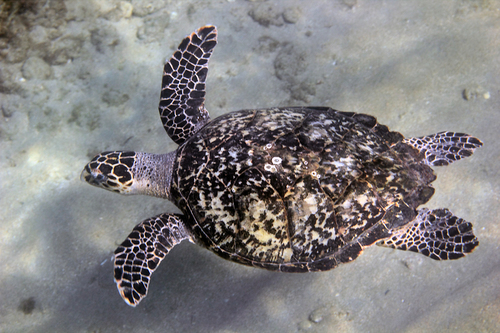
Hawksbill turtle
Seen 3 months ago
at Pescador Island
Critically endangered
Sardines (bait ball)
Seen 4 months ago
at Panagsama Sardine Run
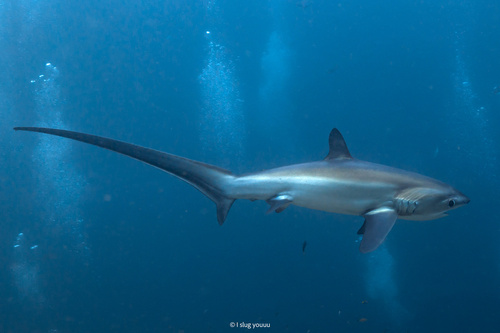
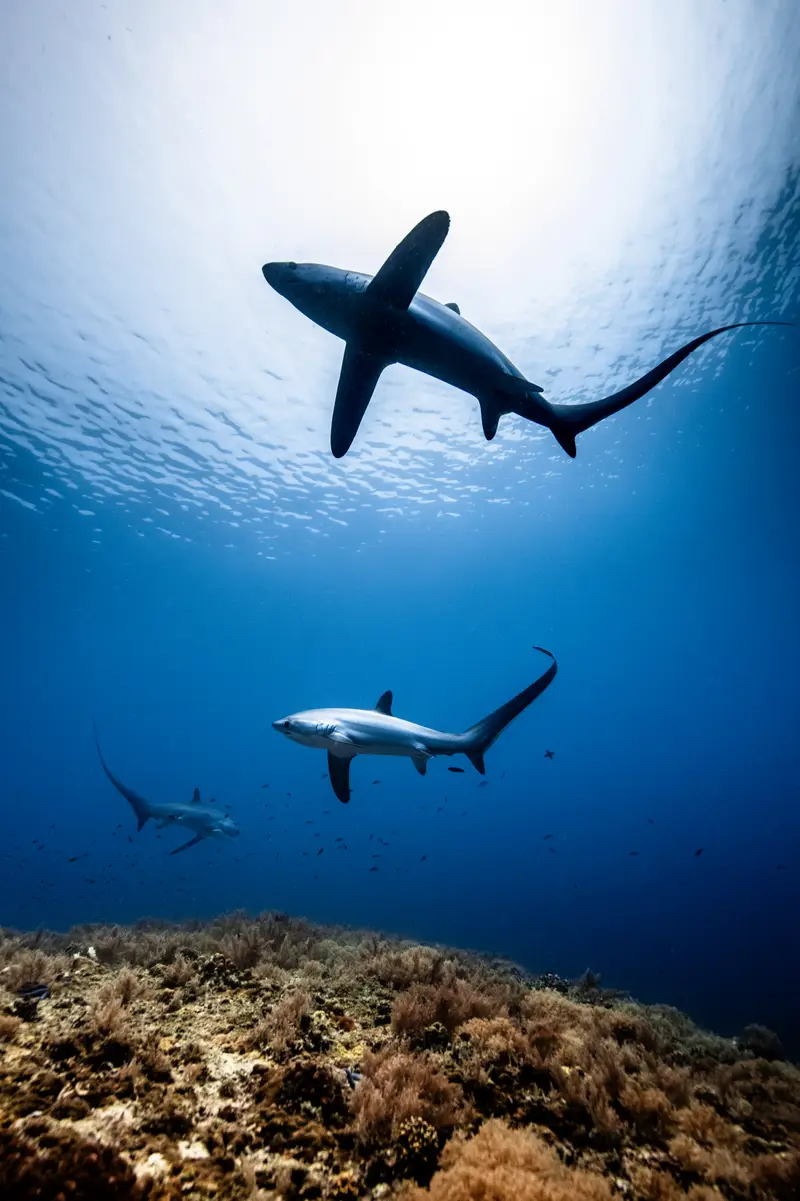
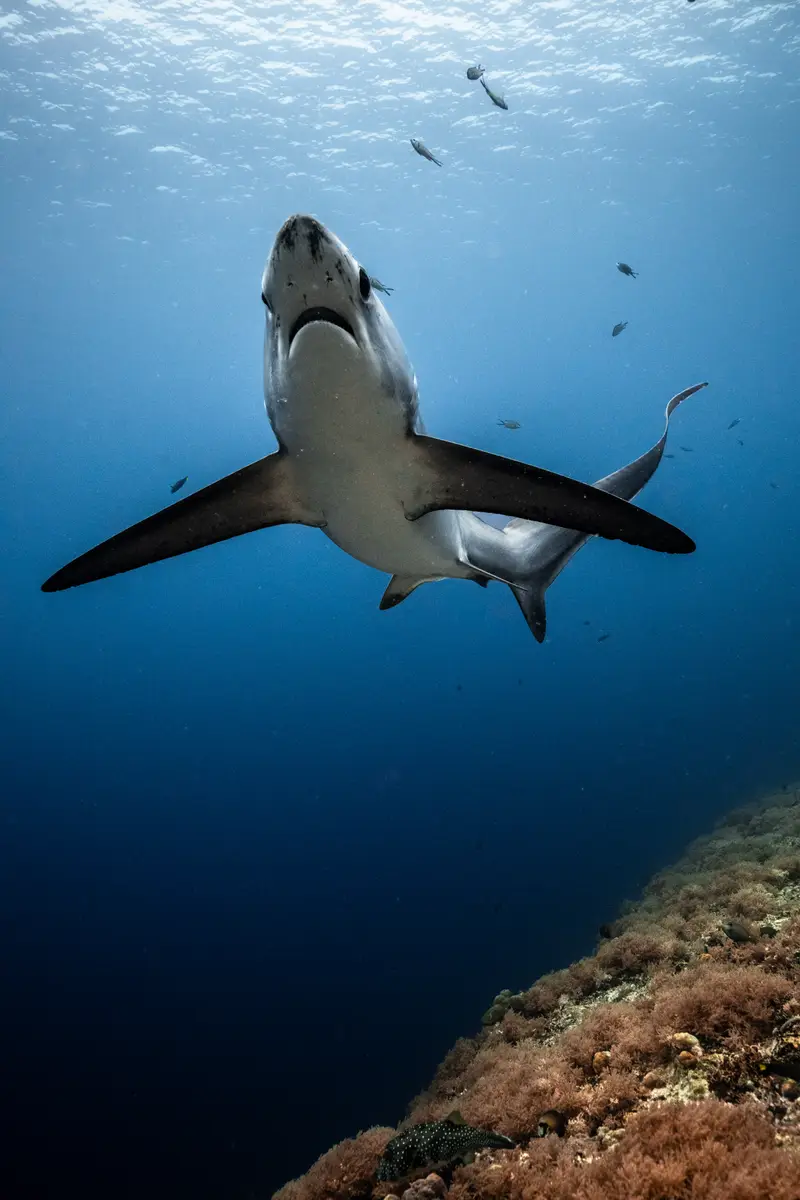
Pelagic thresher shark
Seen 4 months ago
at Pescador Island
Endangered
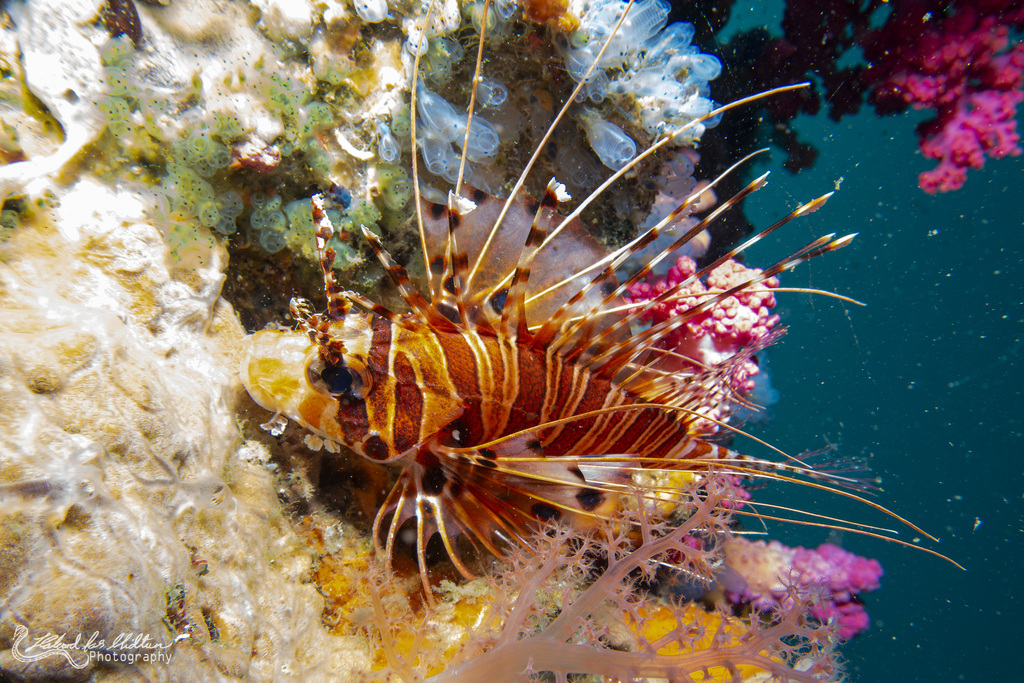
Spotfin Lionfish
Seen 4 months ago
at Pescador Island
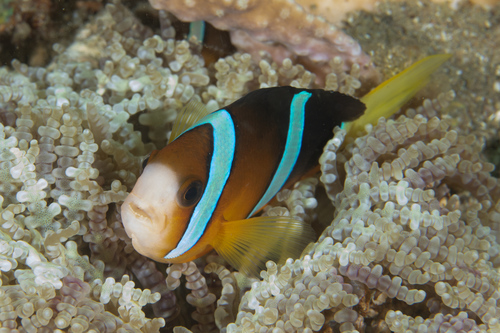
Clark'S Anemonefish
Seen 5 months ago
at Pescador Island
Least concern
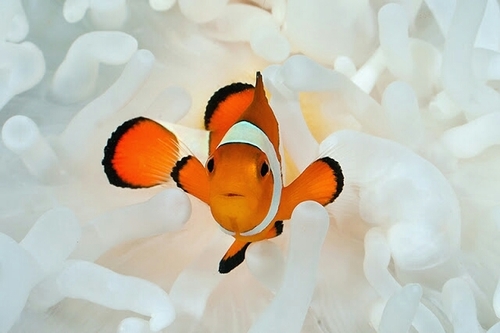
Ocellaris Anemonefish
Seen 5 months ago
at Pescador Island
Least concern
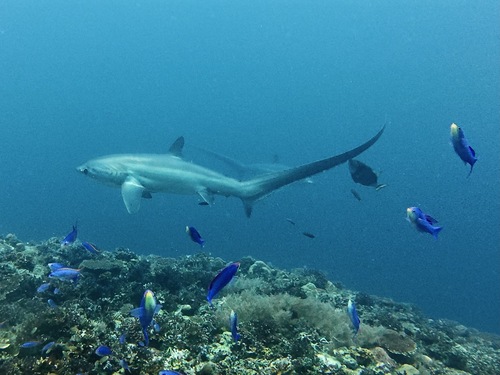
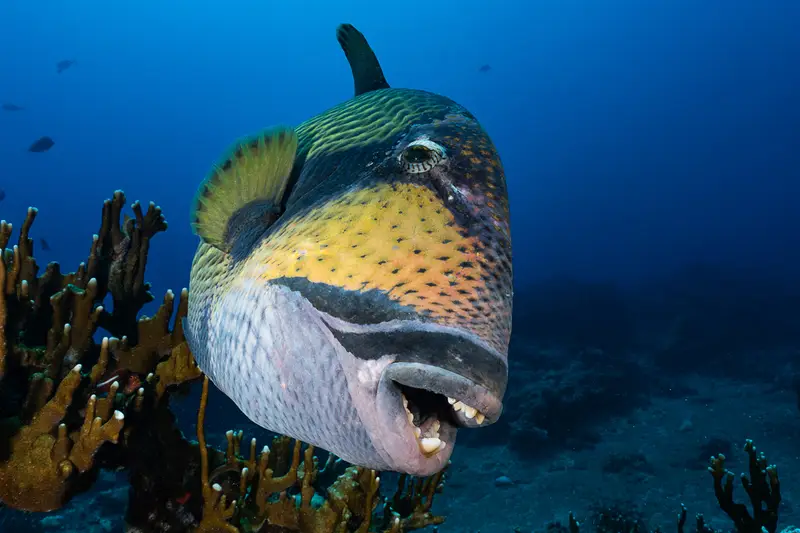
Titan triggerfish
Seen 6 months ago
at Apo Island
Least concern
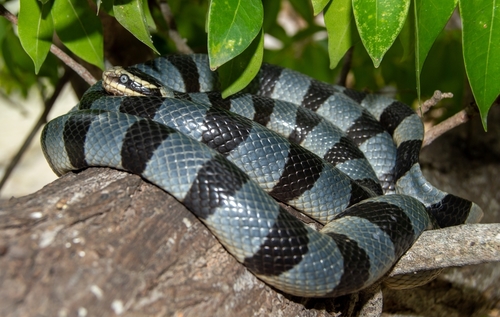
Banded sea krait
Seen 6 months ago
at Pescador Island
Least concern
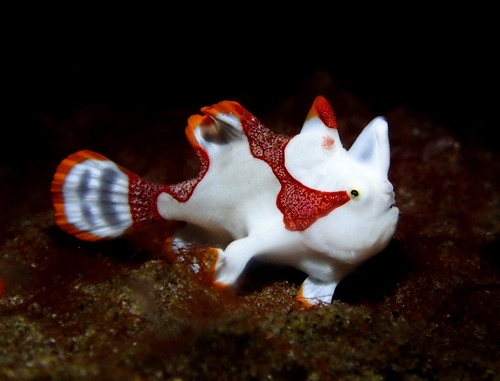
Frogfish
Seen 8 months ago
at Pescador Island
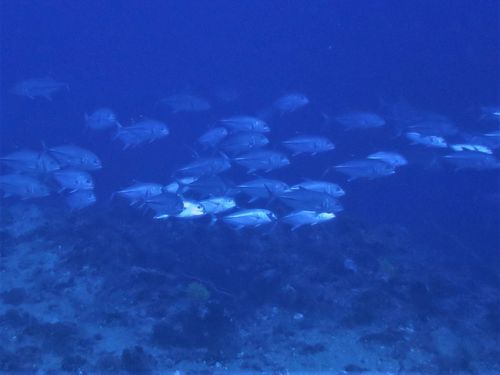
Bigeye trevally
Seen 10 months ago
at Apo Island
Least concern
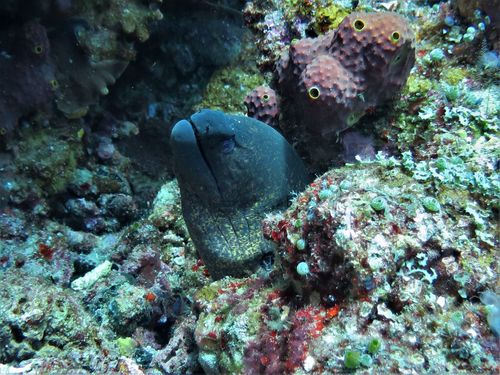
Giant moray
Seen Sep 2025
at Apo Island
Least concern
Sardines (resident school)
Seen year round
at Panagsama Sardine Run
Dive sites
What divers say
Walking into the ocean from the beach and being inside a million sardines within five minutes never stops feeling absurd.
Good to know
Marine sanctuary fee
~PHP 100/day at Pescador, collected by your op.