Tela
Honduras · North Coast
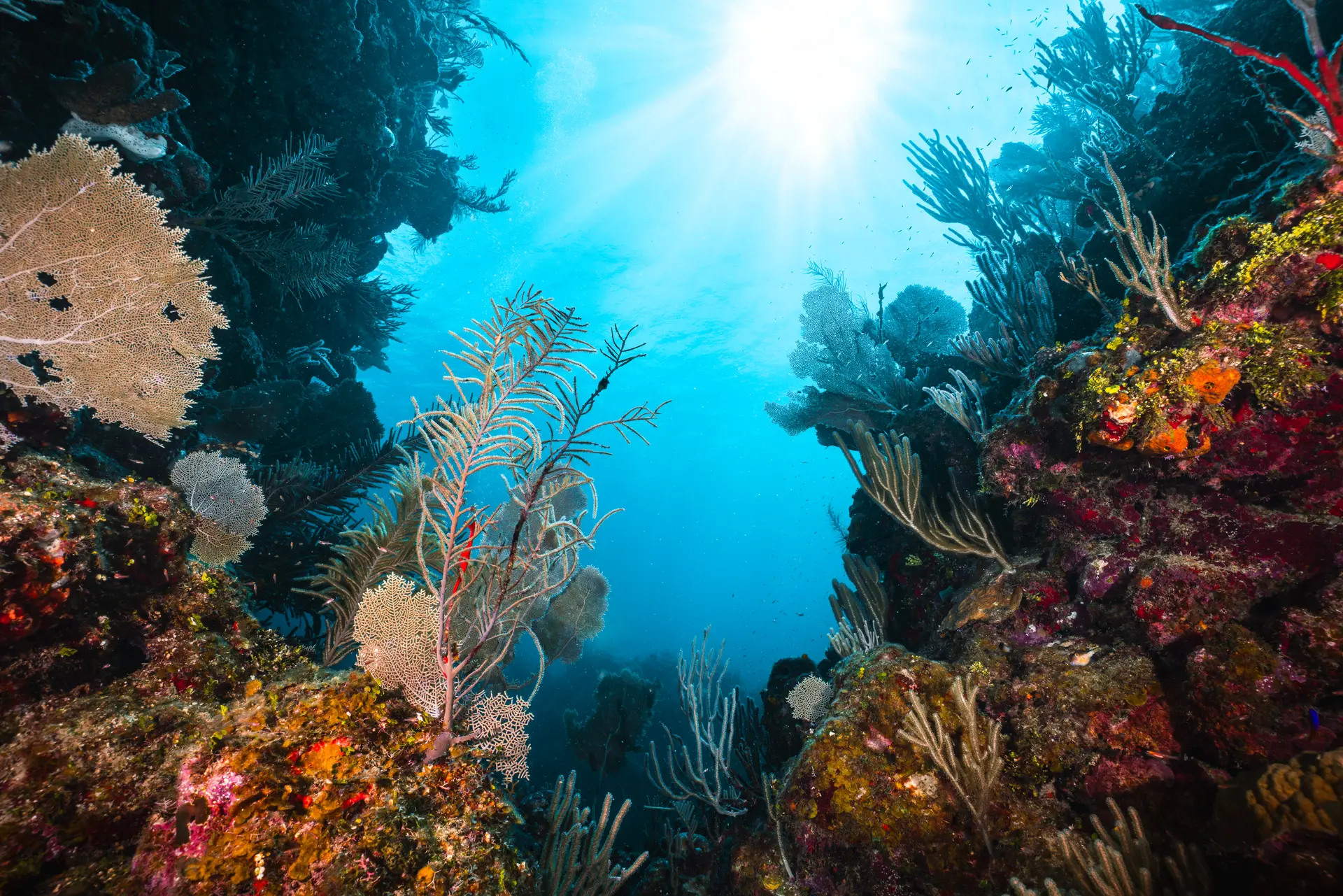
Tela sits on Honduras's Caribbean north coast where an anomaly has captured global scientific attention: the reefs here are thriving. While coral cover across the wider Caribbean has collapsed by more than 50% since the 1980s, the reefs around Tela's Jeannette Kawas National Park have maintained densities of elkhorn and staghorn coral that marine biologists haven't seen elsewhere in the basin for decades. Scientists call it the 'Rebel Reef' — a reef that refuses to follow the script. The leading hypotheses involve cold-water upwellings from the continental shelf that buffer sea surface temperatures during bleaching events, nutrient inputs from protected wetland river systems, and unusually low local fishing pressure within the park boundary. Research teams from institutions across North America and Europe maintain permanent monitoring transects here, and the central question — whether Tela's resilience can be understood well enough to replicate protective conditions elsewhere in the Caribbean — has become one of coral science's most urgent problems.
How this reef is doing
ⓘ How we measure thisReef state
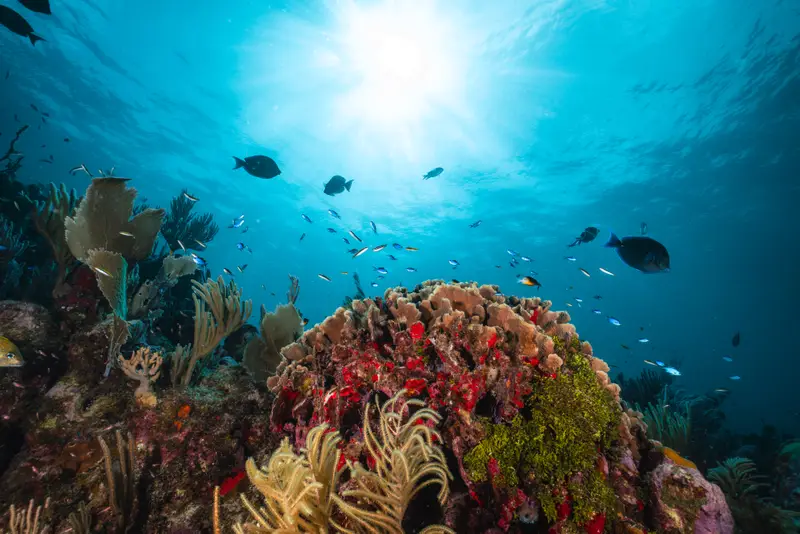
Tela Bay holds some of the most intact reefs in the Caribbean. Coral cover above 60 percent — over 3x the regional average. Banco Capiro and Cocalito are the strongest sites. Elkhorn coral colonies here are being studied for heat tolerant genetics; what you are diving on is living scientific research material.
Coral cover
Fish life
Heat
Warmer than usual right now, but not hot enough to bleach.
Fishing
Quiet water, and fishing is fully banned here.
Sources · AGRRA and GCRMN reef surveys · NOAA Coral Reef Watch · Global Fishing Watch and reef gravity
Coral cover over time
Live coral cover, by survey year
Across 8 survey years from 2011 to 2021, live coral cover here has risen from 20% to 25%. Every point is a real survey reading, never a projection.
Live coral cover, percent by year
| Year | Coral cover |
|---|---|
| 2011 | 20% |
| 2012 | 24% |
| 2013 | 31% |
| 2014 | 18% |
| 2015 | 41% |
| 2016 | 27% |
| 2018 | 26% |
| 2021 | 25% |
What you will see
13 species across the dive sites here
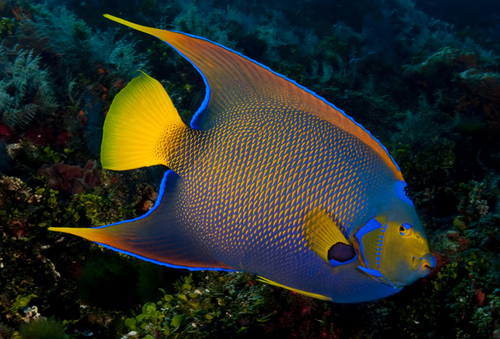
Queen angelfish
Seen Apr 2025
at Scientists' Corner
Least concern
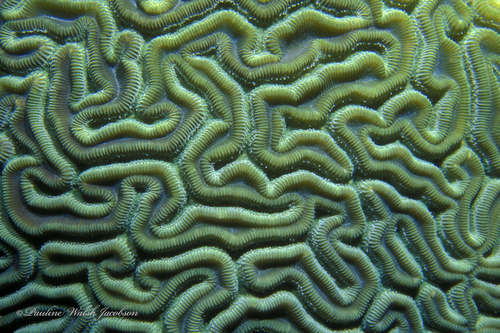
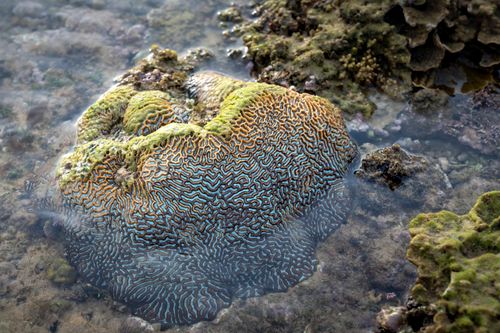
Massive brain coral
Seen Apr 2024
at Scientists' Corner
Critically endangered
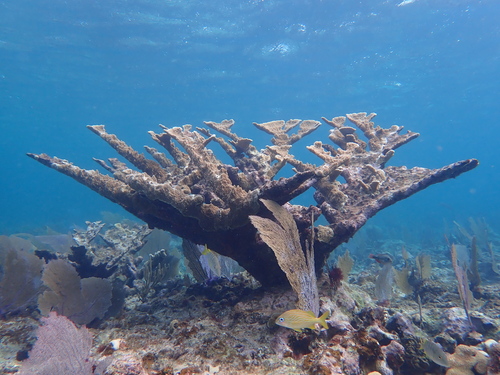
Elkhorn coral
Seen Apr 2024
at Punta Sal Coral Garden
Critically endangered
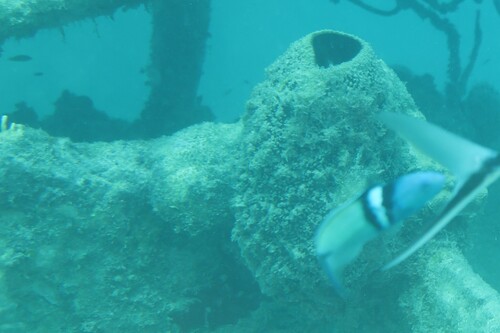
Bluehead wrasse
Seen year round
at Scientists' Corner
Least concern
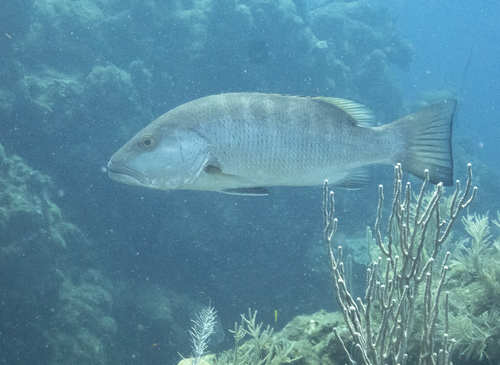
Cubera snapper
Seen year round
at Punta Izopo Wall
Vulnerable
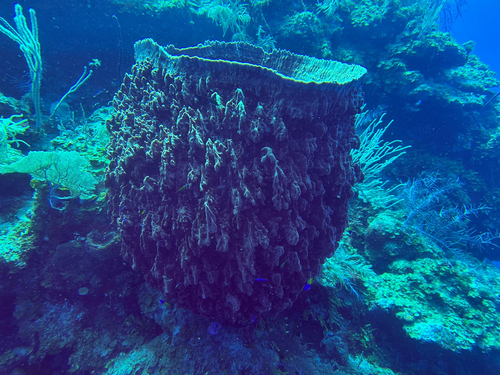
Giant barrel sponge
Seen year round
at Punta Izopo Wall
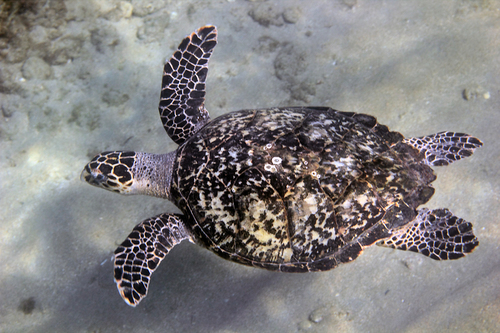
Hawksbill turtle
Seen year round
at Punta Sal Coral Garden
Critically endangered
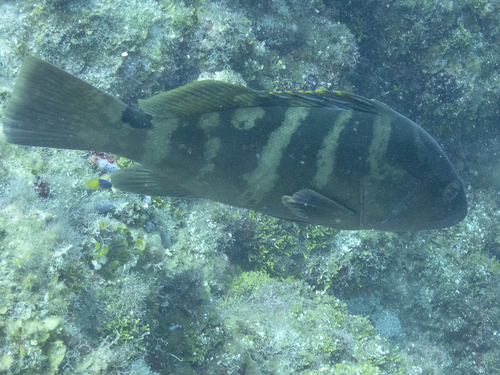
Nassau grouper
Seen year round
at Punta Sal Coral Garden
Critically endangered
Parrotfish (mixed schools)
Seen year round
at Punta Sal Coral Garden
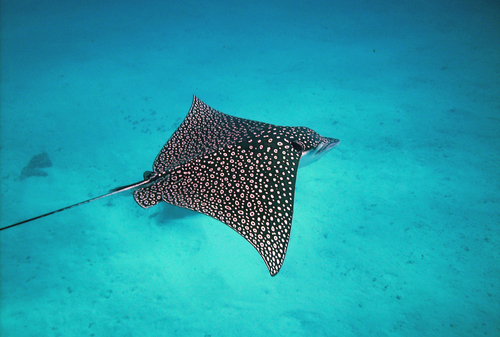
Spotted eagle ray
Seen year round
at Scientists' Corner
Endangered
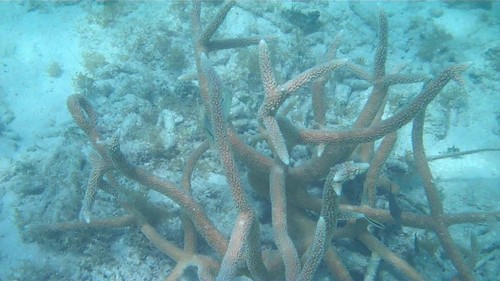
Staghorn coral
Seen year round
at Punta Sal Coral Garden
Critically endangered
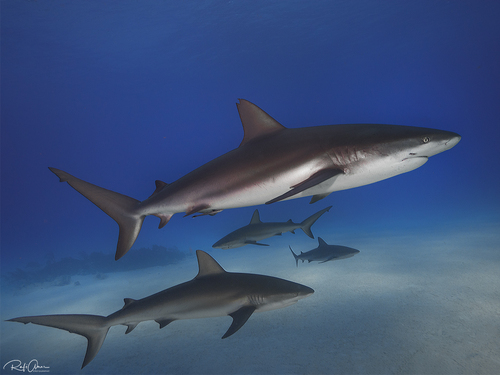
Caribbean reef shark
Seasonal visitor
at Scientists' Corner
Endangered
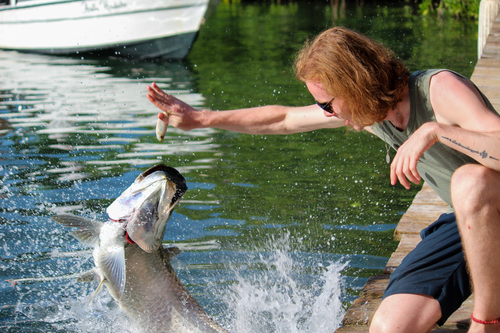
Tarpon
Seasonal visitor
at Punta Izopo Wall
Vulnerable
Dive sites
What divers say
I've dived the Caribbean for twenty years. I had genuinely forgotten what a healthy reef looked like until I came here.
The scientists in the water with us kept stopping to photograph coral. That told me everything.
Good to know
Park permit
Diving inside Jeannette Kawas National Park (Punta Sal) requires a park entry fee, usually arranged by your dive operator.
Research etiquette
Do not touch or anchor near any tagged coral colonies or yellow-flagged monitoring stations. The data sets run back decades.
Rainy season viz
August–October river runoff can drop visibility to 8–12m near river mouths. Outer bay sites stay clearer.