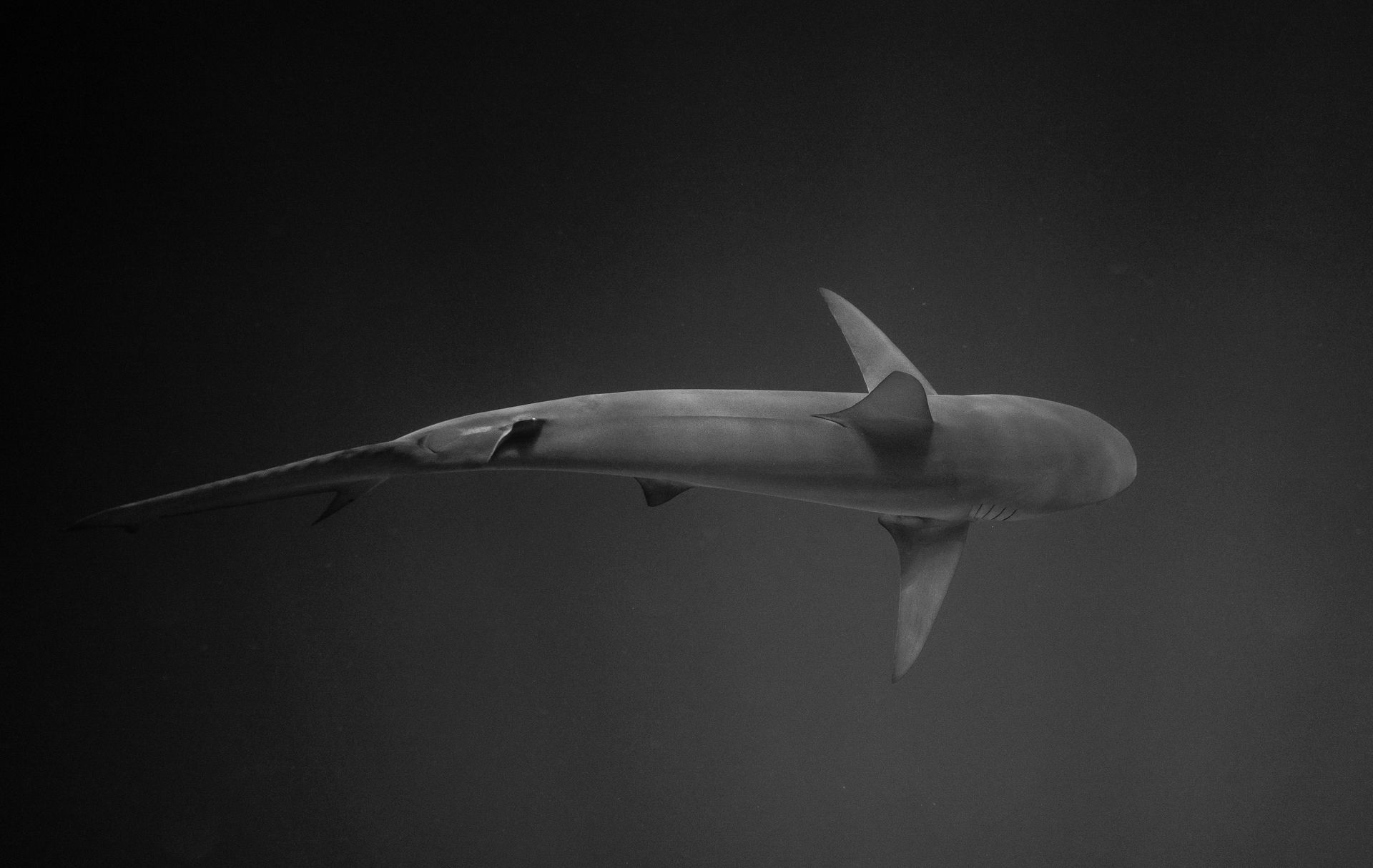
Dirty Rock (Roca Sucia)
Cocos Island · Costa Rica
Cluster of jagged pinnacles off Cocos's northwest corner, streaked with guano that gives the rock its name. Drop down a wall to 20–25 m and hold position at the barberfish cleaning station — scalloped hammerheads queue overhead in schools that can number in the hundreds, sliding in one at a time to be cleaned. Galapagos sharks, marbled rays, and bigeye trevally fill the blue between passes. Strong current and surge are the price of admission.
Conditions
Depth
10 to 35 m
Advanced depths
Current
Often strong
Can pick up on the edge
Visibility
10 to 20 m
Clearest in the calm season
Water
24 to 28°C
Temperate wetsuit
Month by month
| Month | Jan | Feb | Mar | Apr | May | Jun | Jul | Aug | Sep | Oct | Nov | Dec |
|---|---|---|---|---|---|---|---|---|---|---|---|---|
| Water (°C) | 25 | 26 | 27 | 27 | 26 | 25 | 24 | 24 | 24 | 25 | 25 | 25 |
| Vis (m) | 20 | 20 | 25 | 25 | 20 | 15 | 10 | 10 | 10 | 10 | 15 | 20 |
| Current | Moderate | Moderate | Moderate | Moderate | Moderate | Strong | Strong | Strong | Strong | Strong | Strong | Moderate |
Your chances of seeing each animal
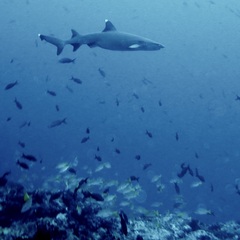
Whitetip reef shark
Last confirmed Feb 2, 2026 · 39 records
Very likely
Most dives
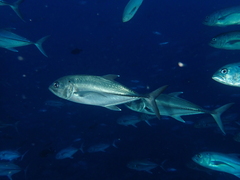
Bigeye trevally
Last confirmed Feb 2, 2026 · 16 records
Very likely
Most dives
Scalloped hammerhead
Last confirmed Nov 15, 2025 · 65 records
Very likely
Most dives
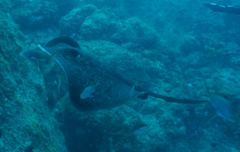
Marbled ray
Last confirmed Feb 2, 2026 · 22 records
Likely
About 6 in 10 dives
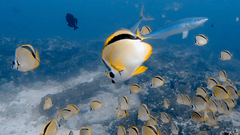
Barberfish
Last confirmed Feb 2, 2026 · 11 records
Likely
About 6 in 10 dives
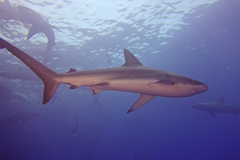
Galapagos shark
Last confirmed Jan 29, 2026 · 2 records
Sometimes
About 1 in 3 dives
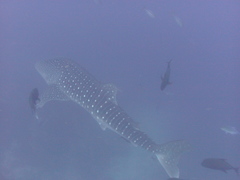
Whale shark
Expected
Known here, not yet in recent logs
Gear
Basic kit
For this site
- Temperate-grade wetsuit · Thermocline can drop into the low 20s°C even during the warm-water months — a 5 mm full suit is the working minimum.↗
- Reef hook · Standard practice is to hook into dead substrate at the cleaning station ledge and hold position while hammerheads queue overhead. Saves air and reduces silting.↗
- Nitrox certification · Hammerhead action is at 20–25 m and divers stay there for the whole dive; EAN32 meaningfully extends bottom time. All Cocos liveaboards offer nitrox.
- SMB and reel · Surface intervals happen well offshore of the main island and current can push you away from the pinnacles fast — every diver carries their own marker.↗