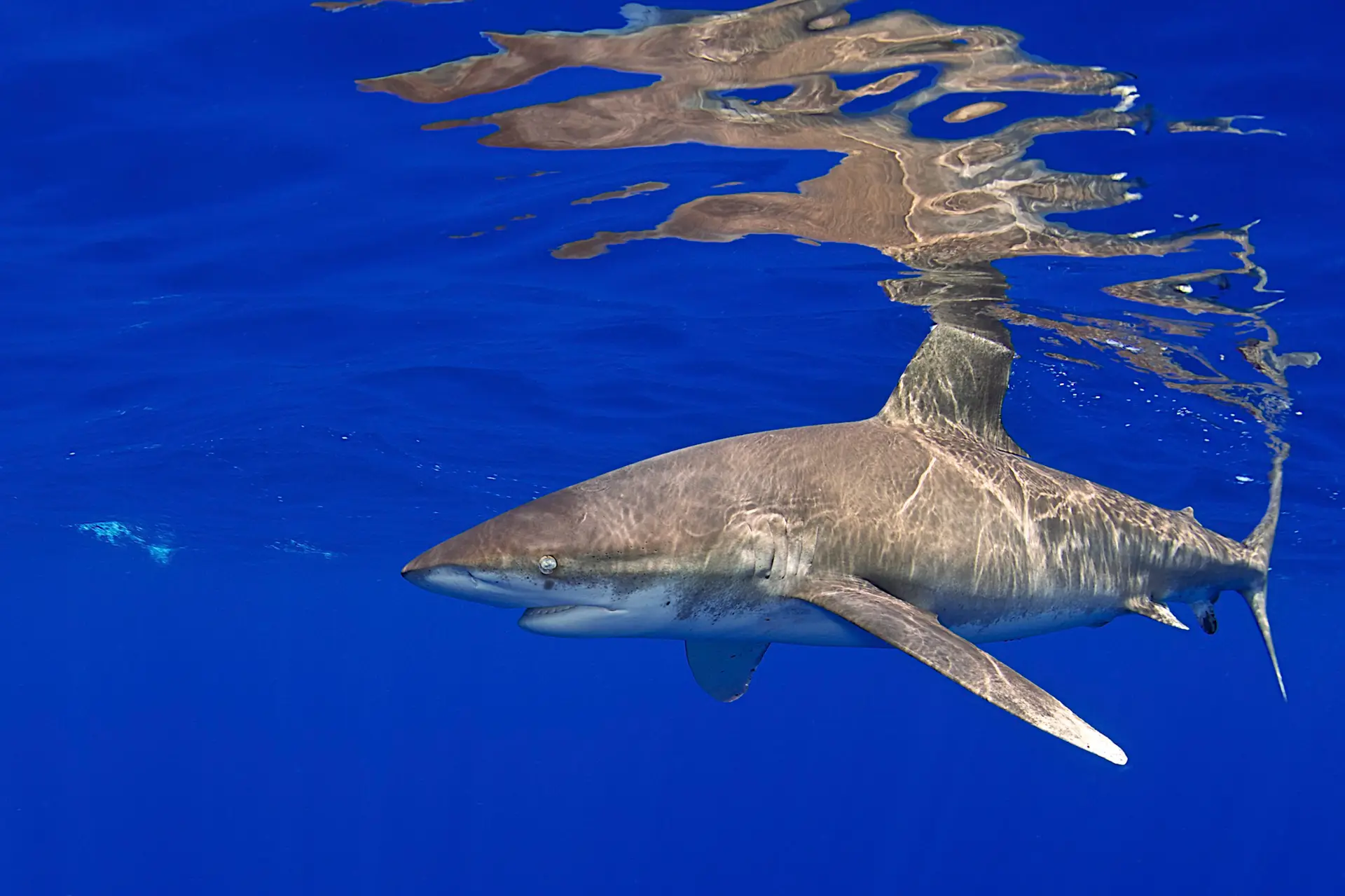
Manuelita Island
Cocos Island · Costa Rica
A 150 m basalt islet off the north east corner of Cocos with three named dives: a deep outside wall holding scalloped hammerhead cleaning stations at 21–24 m, an inside coral garden running 12–21 m, and the channel between the islet and the main island. Tiger sharks patrol the blue, barberfish work the cleaning stations on the wall, and the after dark version is the most famous whitetip reef shark hunting dive in the world — dozens of sharks swarming the reef on a single torch beam.
Conditions
Depth
12 to 30 m
Open water and up
Current
Can be moderate
Can pick up on the edge
Visibility
10 to 20 m
Clearest in the calm season
Water
25 to 28°C
Temperate wetsuit
Month by month
| Month | Jan | Feb | Mar | Apr | May | Jun | Jul | Aug | Sep | Oct | Nov | Dec |
|---|---|---|---|---|---|---|---|---|---|---|---|---|
| Water (°C) | 25 | 26 | 27 | 27 | 26 | 25 | 25 | 25 | 25 | 25 | 25 | 25 |
| Vis (m) | 15 | 20 | 20 | 20 | 15 | 10 | 10 | 10 | 10 | 10 | 15 | 15 |
| Current | Strong | Moderate | Moderate | Moderate | Moderate | Moderate | Moderate | Moderate | Moderate | Moderate | Moderate | Strong |
Your chances of seeing each animal
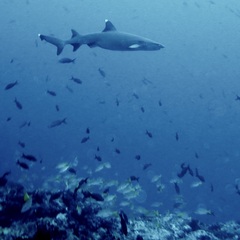
Whitetip reef shark
Last confirmed Feb 2, 2026 · 39 records
Very likely
Most dives
Marble ray
Last confirmed Feb 2, 2026 · 22 records
Very likely
Most dives
Scalloped hammerhead
Last confirmed Feb 2, 2026 · 25 records
Likely
About 6 in 10 dives
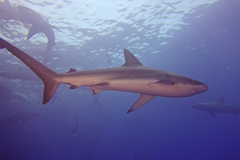
Galapagos shark
Last confirmed Jan 29, 2026 · 2 records
Sometimes
About 1 in 3 dives
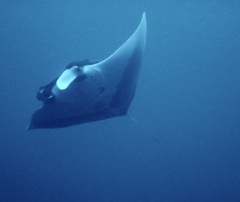
Manta ray
Last confirmed Jan 15, 2024 · 1 records
Sometimes
About 1 in 3 dives
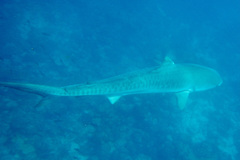
Tiger shark
Expected
Known here, not yet in recent logs
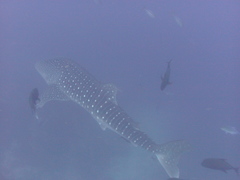
Whale shark
Expected
Known here, not yet in recent logs
Gear