El Monstruo (Bajo del Monstruo)
Malpelo Island · Colombia
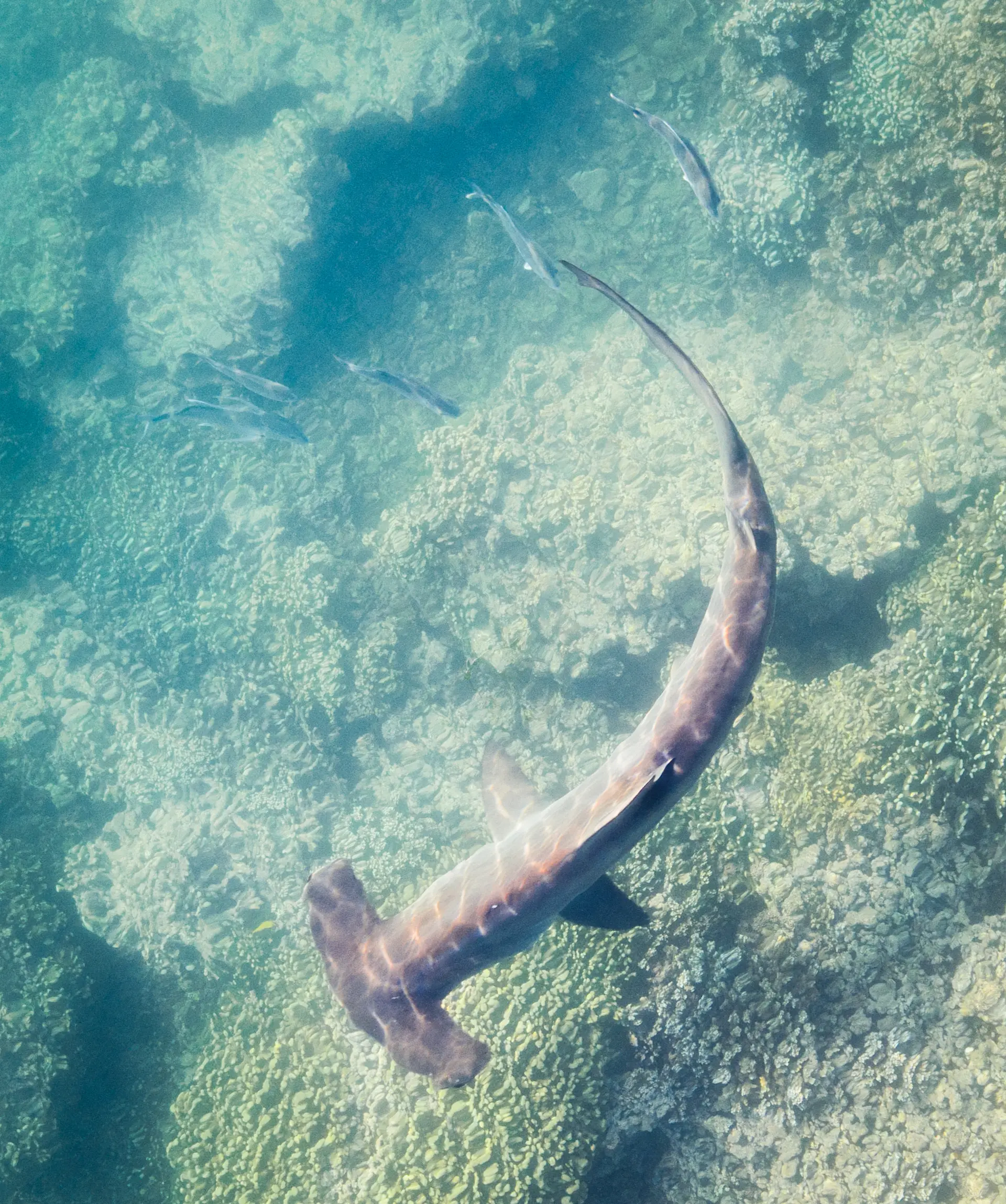
A submerged pinnacle off Malpelo Island and the most reliable place on Earth to encounter the deep dwelling smalltooth sand tiger shark (Odontaspis ferox), nicknamed 'the monster'. The site features a fragile hard coral patch on its south side around 12 m, walls cloaked in yellow orange anemones and gorgonians, a 'condominium of morays' grotto, and a deeper reef slope at 60–70 m where the ferox shark congregates during cold water months. Schools of leather bass, creolefish, jacks and scalloped hammerheads cycle through; strong currents and depth make it a serious dive only run in good conditions.
Conditions
Depth
12 to 70 m
Advanced depths
Current
Can be moderate
Can pick up on the edge
Visibility
15 to 30 m
Clearest in the calm season
Water
20 to 28°C
3-5mm full
Month by month
| Month | Jan | Feb | Mar | Apr | May | Jun | Jul | Aug | Sep | Oct | Nov | Dec |
|---|---|---|---|---|---|---|---|---|---|---|---|---|
| Water (°C) | 20 | 20 | 20 | 20 | 21 | 22 | 22 | 22 | 22 | 22 | 22 | 21 |
| Vis (m) | 10 | 10 | 10 | 10 | 15 | 15 | 15 | 15 | 15 | 10 | 10 | 10 |
| Current | Strong | Strong | Strong | Strong | Moderate | Moderate | Moderate | Moderate | Moderate | Moderate | Moderate | Strong |
Your chances of seeing each animal
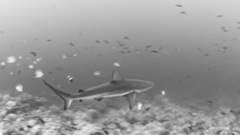
Galapagos shark
Last confirmed Jan 5, 2025 · 99 records
Almost always
Nearly every dive
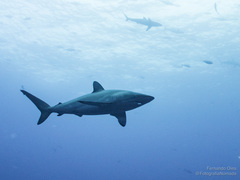
Silky shark
Last confirmed Jan 28, 2025 · 41 records
Almost always
Nearly every dive
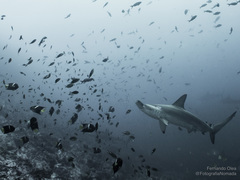
Scalloped hammerhead shark
Last confirmed Jan 29, 2025 · 95 records
Almost always
Nearly every dive
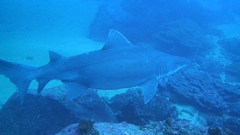
Smalltooth sand tiger shark
Last confirmed Mar 15, 2026 · 45 records
Very likely
Most dives
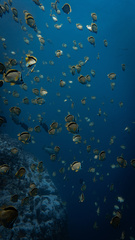
Barberfish (cleaner butterflyfish)
Last confirmed Mar 8, 2025 · 5 records
Very likely
Most dives
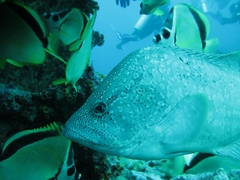
Leather bass
Last confirmed Jun 22, 2025 · 1 records
Likely
About 6 in 10 dives
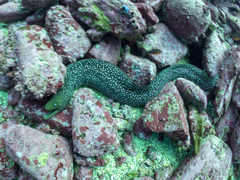
Fine-spotted moray eel
Last confirmed Mar 9, 2025 · 3 records
Likely
About 6 in 10 dives
Gear