The Boiler
Socorro Islands · Mexico
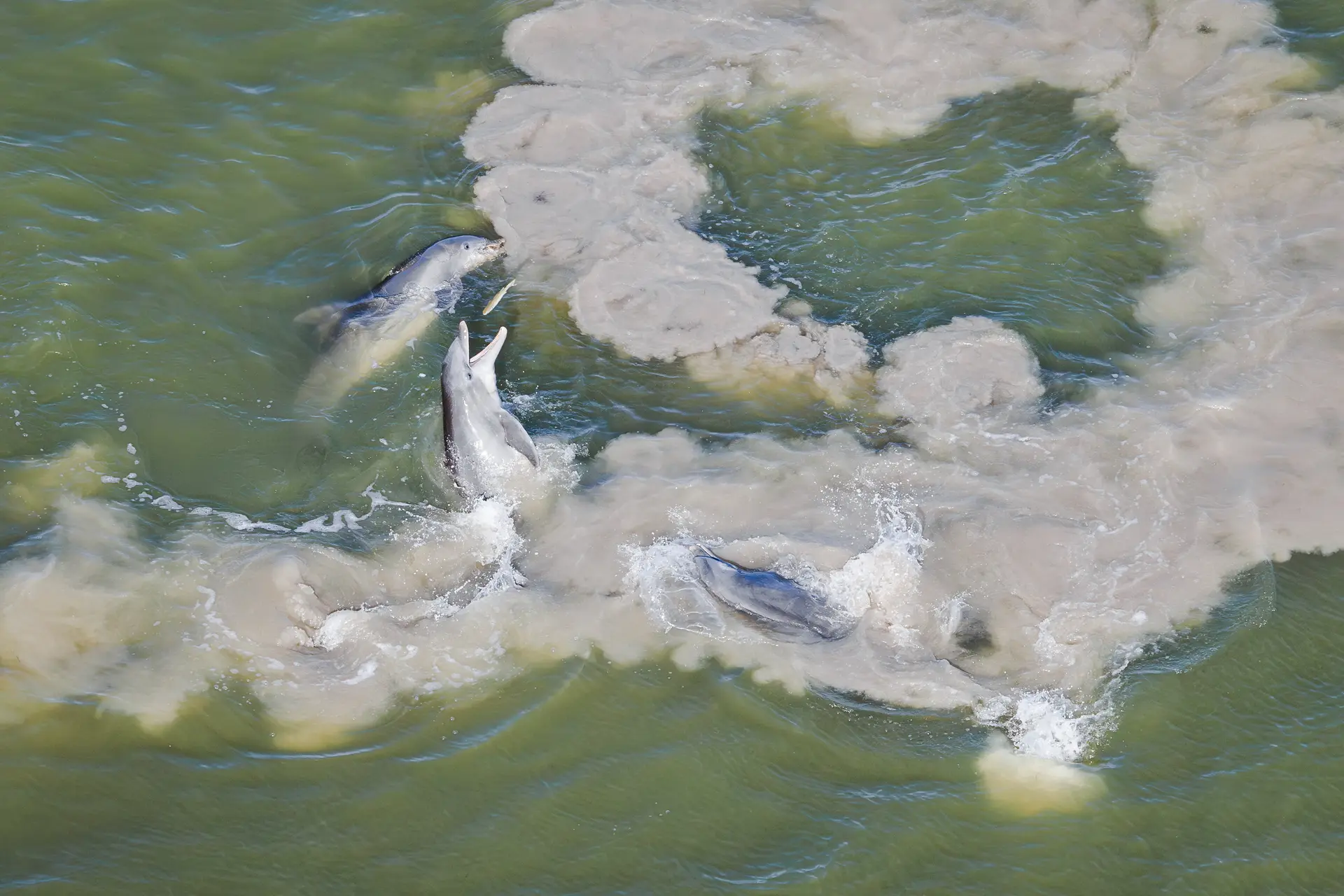
A submerged volcanic pinnacle off the northwest side of San Benedicto Island, rising from roughly 40m to within about 6m of the surface. Named for the way swell breaks over its two 'horns' and makes the water appear to boil, the site functions as a giant manta cleaning station where Mobula birostris are tended by clarion angelfish and routinely engage divers at close range. Bottlenose dolphins, multiple shark species and the occasional humpback whale song round out a small, circumnavigable seamount that can be looped twice in a single dive.
Conditions
Depth
6 to 40 m
Advanced depths
Current
Often strong
Can pick up on the edge
Visibility
15 to 25 m
Clearest in the calm season
Water
20 to 28°C
3mm full (off-season; closed to liveaboards)
Month by month
| Month | Jan | Feb | Mar | Apr | May | Jun | Jul | Aug | Sep | Oct | Nov | Dec |
|---|---|---|---|---|---|---|---|---|---|---|---|---|
| Water (°C) | 22 | 21 | 21 | 21 | 20 | 23 | 25 | 26 | 26 | 25 | 24 | 23 |
| Vis (m) | 20 | 20 | 20 | 20 | 20 | 25 | 20 | 15 | 15 | 15 | 15 | 15 |
| Current | Moderate | Moderate | Moderate | Moderate | Moderate | Moderate | Moderate | Moderate | Strong | Strong | Moderate | Moderate |
Your chances of seeing each animal
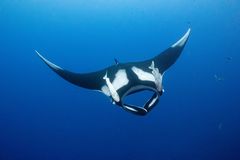
Giant oceanic manta ray
Last confirmed May 15, 2026 · 65 records
Almost always
Nearly every dive
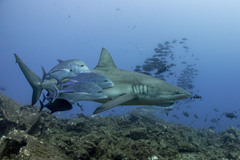
Galapagos shark
Last confirmed May 28, 2026 · 26 records
Likely
About 6 in 10 dives
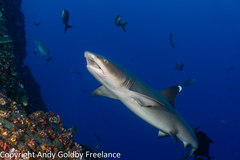
Whitetip reef shark
Last confirmed Jun 2, 2026 · 10 records
Likely
About 6 in 10 dives
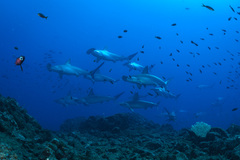
Scalloped hammerhead
Last confirmed May 29, 2026 · 14 records
Likely
About 6 in 10 dives
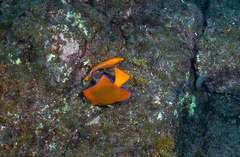
Clarion angelfish
Last confirmed May 28, 2026 · 3 records
Sometimes
About 1 in 3 dives
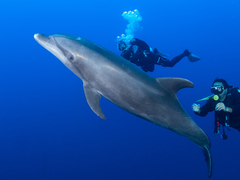
Bottlenose dolphin
Last confirmed May 28, 2026 · 4 records
Sometimes
About 1 in 3 dives
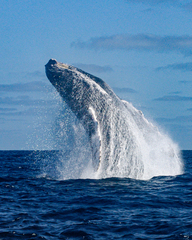
Humpback whale
Last confirmed Feb 7, 2026 · 1 records
Sometimes
About 1 in 3 dives
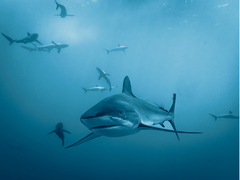
Silky shark
Expected
Known here, not yet in recent logs
Gear